




“I had no know-how at all. But one thing was clear: I didn’t want to use chemicals.”
In 2020, Barsha Agarwal stepped onto a piece of family land in Kanpur that had endured years of chemical farming. With her sons studying abroad, she had time to pursue her interest in plants, perhaps nurtured by childhood visits to nurseries with her mother. When she asked her father-in-law to let her farm the unused land, he agreed.
Her initial aim was simple: grow pure food for her family. Soon, she began imagining a farm she could leave behind for her children.
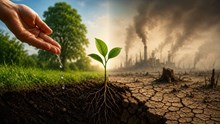
Barsha’s decision reflects a larger call to restore faith in natural farming. The global spiritual master and humanitarian leader Gurudev Sri Sri Ravi Shankar, who has inspired a natural farming revolution across the country by training over 30 lakh farmers across India, says, “It is time to reaffirm the faith in natural farming. It is a complete myth that only expensive fertilisers and pesticides can produce better yields.”
Barsha's association with The Art of Living introduced her to natural farming and permaculture. During COVID-19, Barsha enrolled in a gardening programme, followed by The Art of Living's Permaculture and Beyond programme. After four to five weeks of online theory, she attended residential training at The Art of Living International Centre in Bengaluru.
Initially, she bought organic pesticides, bio-fertilisers, vermicompost and manure. Permaculture taught her to use available resources and minimise expenses. She calls it “jugaad ki kheti.” Cow dung became manure, while cow urine and other farm resources helped prepare material for natural pest control.
Restoring the chemically depleted soil took three to four years of labour and persistent weed management. Gradually, the land began yielding vegetables without chemical inputs. Support from Binay Kumar Singh, head faculty member, Permaculture, The Art of Living, and its community helped her tackle challenges and explore value addition.
Barsha approached doctors, friends, and relatives in Kanpur, delivering five-kilogram vegetable hampers herself. Today, around 50 families receive produce twice a week.
When raw organic turmeric proved difficult to sell at acceptable prices, she learnt processing through the permaculture community. Packaged turmeric under her own brand extended shelf life, reduced wastage and added value.
She diversified into ginger, lentils, mustard, chickpeas, flaxseed, sesame, jowar and bajra. A stone mill produces millet flour, while beekeeping adds honey.
In 2022, she began commercial deliveries using reusable jute, cotton and canvas bags made from waste fabric from her husband’s factory. Four women from nearby villages have been trained to work with her.
What began with a wish to grow pure food has become a farm rebuilding soil, creating livelihoods and nurturing a legacy for the next generation.