





What began as a training-cum-workshop on medicinal cultivation in Bastar evolved into something far larger: a historic confluence of tribal society, scientific institutions and grassroots leadership, united by a shared commitment to forests, sustainability and self-reliance.
Organised under the aegis of the Regional Facilitation Centre (Central Zone), Jawaharlal Nehru Agricultural University, Jabalpur, and the National Medicinal Plants Board, Ministry of AYUSH, Government of India, the programme was hosted at Maa Danteshwari Herbal Farm and Research Centre, Chikhalputi, Kondagaon.

Farmers from nearly sixteen villages across Kondagaon, Makdi and Mardapal development blocks, including Lemdi, Sitli, Kerawahi, Bangla, Bhogadi, Golawand, Umargaon, Bhirawand, Khadka, Kantagaon, Bade Benderi, Poleng and Palli, attended in large numbers. The meeting hall was filled to capacity, reflecting the growing faith among Bastar’s tribal communities in organic and medicinal farming as viable pathways to prosperity.
Participants were introduced to crops such as black pepper, Australian teak, turmeric, annatto, safed musli and stevia. Ashwagandha and Kapikacchu seeds were distributed free of cost. Many farmers pledged to adopt organic, herb-based cultivation practices.
The first session was graced by Dr Gyanendra Tiwari, Director and Senior Scientist at the Regional Facilitation Centre, Jabalpur, as Chief Guest. The session was chaired by senior social worker Bhupesh Tiwari.
The second session assumed historic significance with the arrival of Rajaram Todem, Working President of Chhattisgarh Adivasi Samaj, as Chief Guest, while Dashrath Kashyap, President of the Bastar Division of Adivasi Samaj, presided over the proceedings.
Addressing the gathering, both leaders delivered a message that resonated deeply with the audience: “An Adivasi cannot live without the forest. It is unfortunate that , for various reasons, our forests are diminishing. We must now protect trees from being cut and join hands with Maa Danteshwari Herbal Group to plant trees and learn medicinal cultivation.”
Dashrath Kashyap noted that he had long observed and admired the work of Dr. Rajaram Tripathi. He stated that Bastar’s name has been elevated nationally and internationally through sustained efforts in organic and herbal agriculture, a matter of pride for the entire tribal community. Both leaders assured that the tribal society stands firmly in support of initiatives that bring sustainable development while preserving cultural and ecological identity.
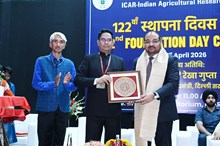
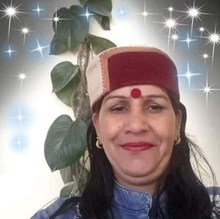
A particularly inspiring moment was the felicitation of Rajkumari Markam, a progressive tribal woman farmer from Kantagaon in Makdi block. Using saplings provided free of cost, she successfully produced 54 kilograms of black pepper, demonstrating that with scientific guidance and assured market linkage, tribal farmers can achieve economic self-reliance.
Experts present at the workshop observed that the market for medicinal plants is expanding rapidly, with the AYUSH sector witnessing unprecedented growth. In this context, tribal-dominated regions such as Bastar hold the potential to emerge as vital hubs in India’s herbal economy.
The fertile soil of Bastar, the resilience and labour of its tribal communities, scientific mentorship and now the open endorsement of top tribal leadership together signal that this herbal initiative may well evolve into a wider people’s movement rooted in ecological wisdom and economic dignity.